Neither a Borrower Nor a Lender Be
 The tools available to make good music have never been more prevalent. Each month I read cover-to-cover 4-5 industry magazines like Electronic Musician, Mix, Keyboard and EQ. I’ve done so for many years and find that it’s a good way to keep up with not only the trends in music, but also the incredible advancement of technology.
I’ll have to admit to being a bit of a technology freak myself and often take advantage of some of the latest and greatest gear out there. More and more in these magazines I find myself skipping the articles and just perusing the ads looking for the new technology to make my musical way easier and more professional.
More and more I find that the advancement of technology is pointed to the amateur musician who doesn’t really have the skills to make good music and needs a little help. This is a good thing and perhaps a not so good thing.
It’s a good thing because it involves thousands more into the music making process that otherwise would not know how. It’s educational, it’s stimulating interest in the wonderful world of music creation and it’s enabling the talented amateur to skip over years of training and create sometimes-good music with unprecedented ease.
It’s perhaps not such a good thing because it’s enabling talent to skip the long laborious process of education and putting talented people in the position of making decent music easily. Unfortunately, because of this leaping over the road of hard knocks, we’re starting to see the results in a kind of mediocrity of music that is the result of this new technology.
If you’ve followed this blog, you know that I am an advocate of the new and incredible sampling technology. I take advantage of the tools every day and it has saved me small fortunes on every record I produce and, though not necessarily a time saver if done right, it certainly has enabled the increase of my professional production over the years.
In the beginning of this sampling adventure our industry produced tremendous virtual libraries of sounds, which are the real orchestras, played by real musicians, note-by-note, instrument-by-instrument. Expensive orchestras no longer had to be hired to create good music. A one-time purchase of an often-expensive library would set the composer/producer up royally.
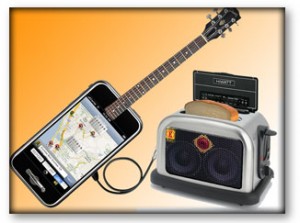 As the technology advanced, the replication of the sounds of real orchestras just got better and better until now it’s very difficult for most people to tell the difference and in some cases, when it’s done right, impossible for anyone to tell the difference.
I grew up a drummer, and the one area that was always obviously lacking to me was midi-sampled drums. A great drummer just has a feel, call it a human feel, that us unmatchable with midi drums. Midi drums were often put together too perfectly and consequently lost the ‘human feel’ and came off somewhat robotic. It made for good solid dance music, but little else.
Then, with the advancement of computer processing power and enhanced memory, loop drumming was born. Instead of recording drums hit-by-hit, stroke-by-stroke, great drummers were brought into the studio and asked to play 4-8 bar grooves – the kind of groove that they might play on a recording. The entire performance would be recorded in minute detail and then broken down later into construction kits that enabled the eventual user to change the tempo, isolate say the high hat cymbal from the kick drum and increase the volume of the snare drum without bringing up the rest.
This I loved! I’ve always said that when you budget a song in the studio, if you want to triple or quadruple your budget, just add drums. In pop music the drums are the hardest things to record and get right, and in the old days even in the mixing process, the engineers spent far more time getting the drums right than any other instrument.
So the ability to work with the best drummers in the world, with a huge selection of sounds, grooves and excellently processed drum kits, turned out to be a huge time-saver and gave songs a totally professional quality which only enhanced the production.
Then producers of sampling technology, seeing the success of loop drumming, began creating loop bass playing (8-16 bar bass patterns played in various styles, keys and tempos), then loop guitar, loop piano patterns, loop percussion, etc.
Great studio musicians who used to actually go to sessions every day and create tracks for people now, of course, were out of work and so they succumbed to recording loop grooves and samples and putting them out as libraries for people to buy. Though the libraries were at first somewhat expensive, competition drove the price down such that now the market is flooded with more sounds, loops, samples and grooves than one can possibly keep track of or even imagine.
Then sample producers started to actually put together entire tracks for songs with multi musicians and then breaking them down into construction kits for the amateur to rebuild later into their own music. This has been a very popular item in the marketplace and I have watched my industry advertise these construction kits and their various styles of Rock, Hip-hop, R&B, etc. more and more.
These song tracks – think Karaoke – could be creatively reorganized into new and varied song tracks, they could be used partially and added to, or they could provide the user with ideas on which to base creation. Unfortunately, one simply hears too often, the track just put back together in its original form. Why is this unfortunate? Because it’s creating often a world of re-hashed music. Music that we’ve just simply heard before.
I listen to the radio today and what do I hear all too often? Re-hashed Rolling Stones, rehashed Beatles, re-hashed Stevie Wonder. What about the new directions of music built upon the history of Rock, but bringing new life to the genre? Far too often, I just don’t hear it.
I spin through my radio dial and hear Pop music that bores me again and again because I’ve heard it before. It’s either canned or stolen. I’m all for reacting to something great. As musicians, we’ve always done that. We’ve reacted to the greatness of our predecessors and consequently new trends are created.
But, again, too much of what I hear today is not built upon that historical significance, but instead, built upon doing it the easy way by amateurs who have leapt over the process of education and circumvented the ‘coming up through the mail room’ process only to produce retreads of music already created.
Herein lies the danger of technology. If technology makes it so easy for anyone with a little talent to make decent music and people get used to it – the way people have gotten used to the sad artistic so-called excellence of prime time television, then where are we headed? Down a long road of mediocre music, I’m afraid.
I’m realizing that I’ve taken part in all this occasionally myself. Where is the fine line between what’s borrowed or stolen or what’s used and changed slightly creatively? It’s tricky. So much of music is derivative of what went on before. The tools are wondrous and oh so tempting.
Where do we stop? It’s a fine line.
So to borrow the phrase, “Neither a borrower nor a lender be”, let’s try to maintain the integrity of creation. Let’s learn our craft so that we may have the tools to be original, to be truly creative and not re-hashers of other’s creativity. Let’s demand more of ourselves and use the tools of technology in integral ways that support creativity, but do not create copycat music.
Let’s not steal from one another, but, instead, react off of one another. Let’s not always look for the easy way, but the best way of doing things.
In this crazy world of file sharing, stolen music, re-hashed borrowings and construction kits, let us re-find our true originality.
Let us be truly creative, before we lose the impulse in technology’s ease of use.
For more inspirational music, thoughts and ideas from Peter Link,
please visit Watchfire Music.
I do the writing and pick the pictures and our staff does the design and posting. Good luck with your own site.
I adore your blog site.. pleasant hues & theme. Do you style this site by yourself as well as have a person rely on someone else to make it happen for you? Plz reply while I’m wanting to style and design my own web site. Appreciate it.
Why not? If you can do it, do it! Use the technology to its maximum. It can only help.
Couldn’t agree more, Bob. However, I believe that all art is best when the meeting of technology and inspiration is done on a high level. It takes both to make a great record. We get thousands of submissions here at WFM from many artists. Sometimes there’s gold buried in the bad technology, but the sound or the hiss or the noise of the CD just makes us have to reject it. Usually, that’s when we step in and lend a helping hand. Perhaps help financially with the mastering or a remix or even ask them to start all over with professional help.
But you’re right, without the ability to make good music first, there’s not much sense in wasting your time. The technology can only go so far. Talent is king, but technology is important and not to be rejected.
RQ (Rhetorical Question): What’s more important—great music (memorable melody + awesome accompaniment) or great technology?
RA (Rhetorical Answer): Great music!
If the music is crap, the technology cannot and will not rescue it, and the result will be crap music executed by great technology.
If the music is great, the music will be memorable and awesome despite the technology.
Examples: http://www.bobkwebsite.com/#bobkmp3files
Hi How do you feel about the new DJ,S that are coming thru with there lap tops ect do you think that with all the new gadgets around that a Bedroom dj can just now take a lap top and play a set in a club?